
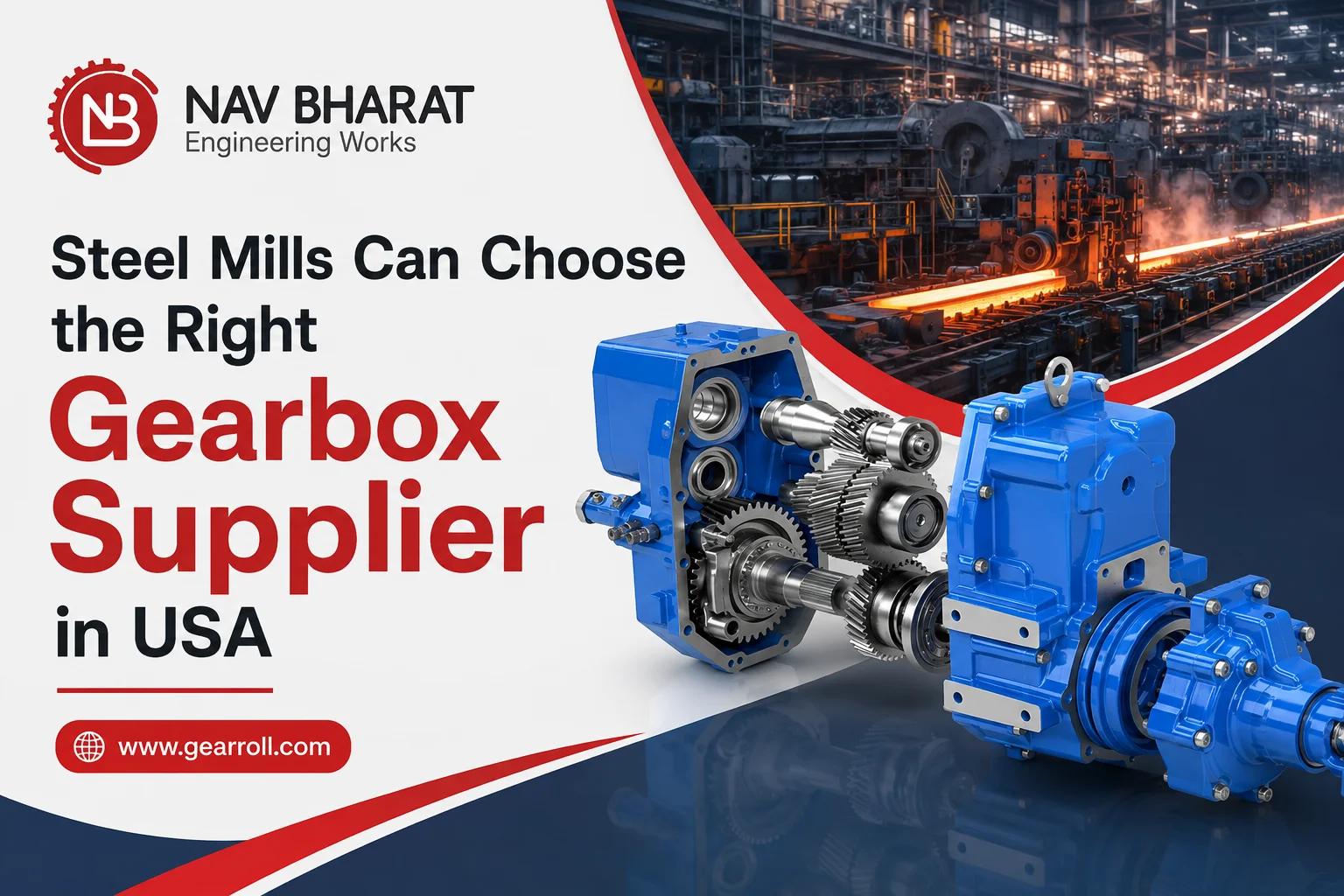
Steel production companies in the U.S. utilize high-performance machines to increase their production levels to cope with an increasing demand from various industries such as construction, automotive, energy, and infrastructure.
In order to keep their production processes going at maximum efficiency, the steel producers have to use highly effective equipment that would not be prone to breakdowns under constant and heavy operational loads. The industrial gearbox is one of the key devices that ensures efficient power transfer and overall machine operation. This is why the selection of the right Gearbox Supplier in USA cannot be reduced to just buying some products.
Here are the main points to consider when selecting the right supplier of this kind of equipment.
Seek Industry-Specific Experience
Not every manufacturer of the same product works in one and the same field. There are certain specifics of working in a particular industry, and it becomes clear while producing steel.
Supplier, which has experience in rolling mills and steel manufacturing understands these specifics and can offer gearboxes designed to operate in such an environment. Moreover, he is able to offer a solution that will meet the needs of your production.
Consider Manufacturing Capabilities of the Supplier
The quality of any gearbox depends on the way of its production. Therefore, before making the choice of a gearbox supplier in USA, you should look at its manufacturing capabilities.
- A good supplier has modern and precise manufacturing facilities equipped with CNC machine tools, machining facilities, gear grinding equipment, and quality inspections.
This will guarantee the right alignment of the gears and their smooth working even under heavy loads.
Check the Gear Accuracy and Precision
Industrial gearboxes face high pressure every day. Minor deviations from specifications can cause problems such as vibration, excess noise, and early breakdowns of components.
Inquire whether the supplier adheres to internationally recognized quality standards and gear grinding technology. Better gears mean higher efficiency, less wear, and longer operational life.
Greater gear accuracy is also beneficial in terms of reduced energy losses and more cost-efficient industrial processes.
Seek Custom Engineering Assistance
Steel mills are different when it comes to their production capabilities, layout, and operating conditions. Standard gearboxes may not always suit the needs perfectly.
An experienced supplier will provide you with custom gearbox engineering considering such factors as:
- Required torque and speed
- Mounting configuration
- Loading conditions
- Available space
- Operational environment
Custom-made gearboxes will usually outperform standard gearboxes since they are designed according to your particular needs rather than requiring future changes and adjustments.
Evaluate the Material Quality
The longevity of an industrial gearbox relies greatly on the choice of materials used in its manufacture.
The use of high-quality alloy steel, precision heat treatment and appropriate surface hardening helps to increase wear and fatigue resistance. Quality materials also ensure gearboxes can withstand continuous heavy usage in steel mills.
Ask suppliers about their materials selection practices and quality control measures prior to making your purchase.
Check Testing and Quality Assurance
Competent gearbox suppliers perform testing of all units before shipment. Tests could include the following procedures:
- Load testing
- Analysis of noise and vibrations
- Inspection of dimensions
- Checking of gear teeth accuracy
- Testing for performance
Complete testing decreases the risks of unexpected malfunctions after installation and ensures that the gearbox will work as required.
Evaluate Technical Support
Purchasing an industrial gearbox becomes the first step in a long-lasting relationship.
A trustworthy Gearbox Supplier in USA provide technical support during installation, commissioning, maintenance, and troubleshooting. Timely support helps to decrease downtime due to operational issues.
Engineering consultation provided by the supplier could be very helpful in upgrades or replacement projects.
Compare Lead Times and Delivery Reliability
Equipment failures could interrupt production processes and increase costs. Consequently, delivery schedule is a crucial factor.
It is advisable to choose the supplier with effective manufacturing processes and realistic delivery timeframes. Reliable delivery planning helps steel mills organize their maintenance schedules and avoid production interruptions.
Consider Long Term Value Not Just Price
Choosing the most affordable gearbox could seem as economically justified at first glance. Nevertheless, increased costs due to frequent repairs, additional maintenance expenses and short service life can make such a choice unprofitable in the long term.
Evaluate the total value offered by the supplier. High-quality manufacturing, durability of materials, precision of engineering and reliable technical support could lead to lower lifecycle costs and improved performance.
Conclusion
Choosing a suitable Gearbox Supplier in USA is not just about comparing their product specifications. Steel mills should take into account manufacturing capacity, engineering know-how, quality of the products, testing methods, technical support, and reliability.
Cooperation with an experienced gearbox manufacturer will ensure good performance of the equipment, less downtime, and higher productivity. In other words, a reputable manufacturer will become a reliable partner for you to ensure efficient steel production and future growth of your operations.
FAQs
The right supplier will provide you with the highest quality gearboxes that will help to increase efficiency, reduce downtime, minimize maintenance cost, and maintain productivity for many years to come.
High torque capacity, precision gear manufacture, quality materials, efficient heat treatment, minimized vibrations, and reliable performance under heavy-duty conditions.
Yes, many suppliers offer their customers to design custom gearboxes according to the required operating speed, torque, mounting type, loads, and space available for installation.
They reduce friction, vibration, and noise level, increase the efficiency of power transmission, and extend the lifespan of the product.
Manufacturers usually recommend regular inspections depending on operating hours.
